‘Transportation is a barrier in Rapid City.’
That’s something staff at the John T. Vucurevich Foundation have heard for years from residents, leaders and nonprofit officials.
Reliable transportation is essential in communities like ours, with a low walkability score, for families to maintain a healthy life and secure a stronger future.
JTVF staff and board of directors recently gathered with community stakeholders to learn how transportation barriers currently affect life for some Rapid City residents. We heard three things.
1. Lack of reliable transportation is an employment barrier.
In vehicle-dependent Rapid City, those without a vehicle struggle to keep work.
“Clients have had to turn down job opportunities due to limited hours of operation for busing,” said Lori Larson, program manager for Workforce Connections, which provides support, mentoring and advocacy for those pursuing adult education. “Entry level jobs are typically not available in shifts that are within the bus route hours.”
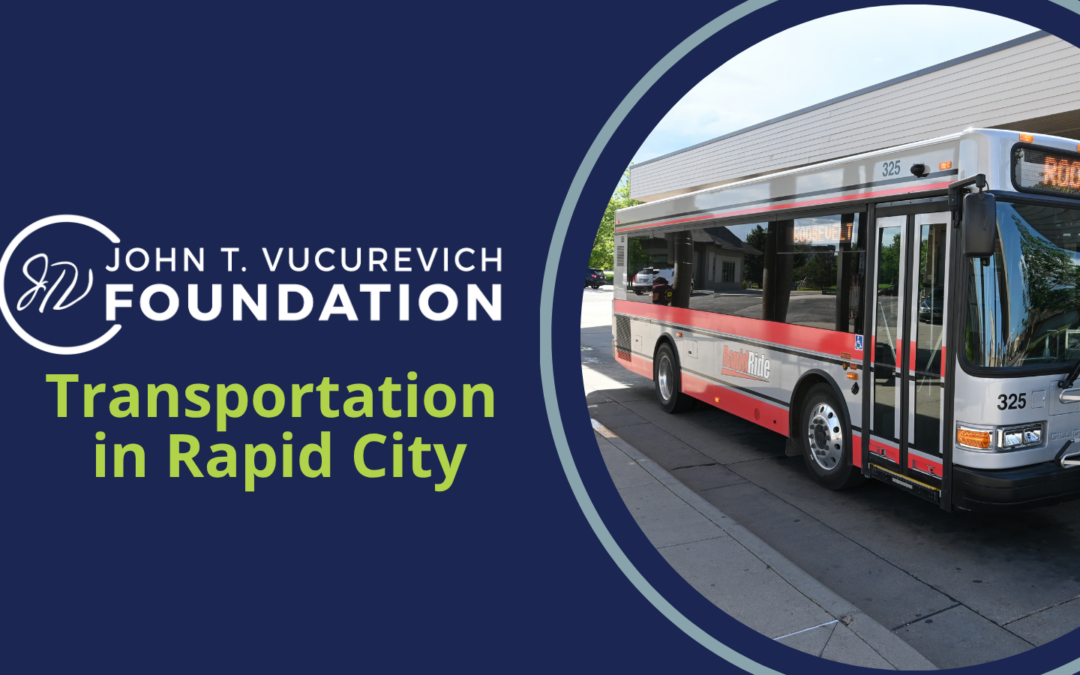
Rapid Transit System (RTS) operates roughly from 6 to 6, which means employees using public transit must navigate getting home after their shift ends. Additionally, wait times between buses means riders might have to wait about an hour if they miss the bus.
Removing employment barriers is imperative for businesses in a community with a 1.7% unemployment rate.
2. Rapid Valley and Box Elder need public transit.
Many find affordable housing there, but are unable to tap into the transit system, which ends at city borders. Folks living in those communities must provide their own transportation to reach work, school and other services.
3. Affordable auto repair is needed.
While increased wages for mechanics is a good thing, higher repair costs (and parts) are squeezing those who live on the margins. Nonprofits like Shift Garage are helpful in getting those who need help back on the road. However, repairs are often weeks out.
Transportation insecurity indicates other forms of material hardship, including food access, unmet medical needs and housing insecurity.
“The people that are utilizing our services absolutely need it,” said Megan Gould, manager for Rapid Transit System, which has been in operation since the early 1990’s. “A lot of them are there every single day—day in, day out.”
RTS is undergoing a microtransit feasibility study to help citizens who are underserved by the existing fixed-route service.
The Foundation looks forward to the results of that study. Meanwhile, we are actively engaging with those who have already invested in transportation solutions to better understand approaches that could inform local efforts.
JTVF recently released a document titled “’It’s Literally Limiting’ How Transportation Barriers Affect Employment and Quality of Life in Rapid City.”
It is essential for the community to gauge how reducing these barriers can lead to better outcomes for individuals, and, as a result, lead to a better and healthier community.
If you have ideas about how to reduce transportation barriers in Rapid City and want to share them, email Lee Strubinger at lstrubinger@jtvf.org.