South Dakota’s small population means that most residents, especially West River, are one or two degrees removed from each other. That closeness, said Rapid City Mayor Jason Salamun, is what makes the state so special.
Those relationships have “really been the key to our survival,” Salamun said during a speech at last November’s Nonprofit Leadership Summit. “It’s also the key to our future and the key to our prosperity.”
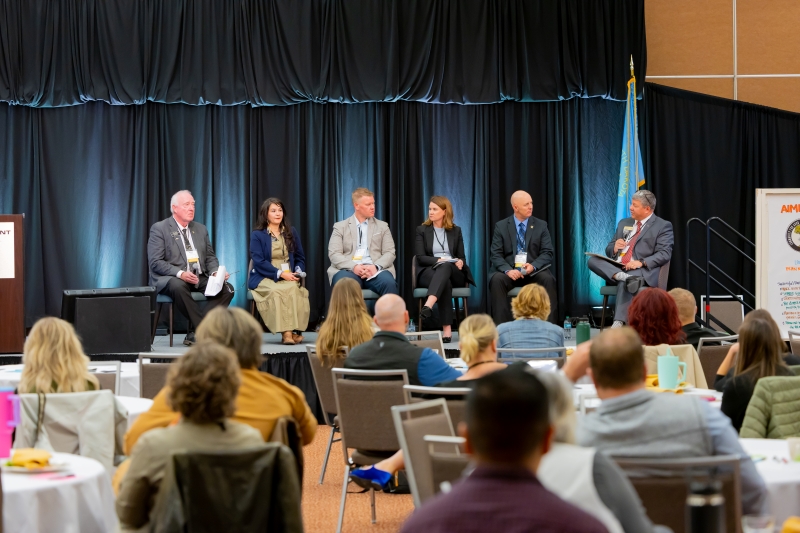
Those remarks opened a plenary session titled “Aiming for Stronger Partnerships.” It featured a range of local, state and federal officials. Those panelists—mainly government officials—shared their thoughts on what makes partnerships between government and nonprofits effective. Alan Solano, former legislator and current VP of Government Affairs at Monument Health, moderated the panel.
Collaboration is one of the best ways government and nonprofits can work together.
Building connections can help strengthen the community in the long run.
“One of the characteristics that make the most successful [partnerships] is… having a seat at that table,” said panelist State Senator Red Dawn Foster, D-Pine Ridge, who is also interim CEO for the SuAnn Big Crow Boys and Girls Club in Pine Ridge. “Because we bring a unique perspective and a lot of these non-profits are working in a community that are tasked with helping the native community. It’s so important to have that voice there.”
That sentiment was echoed by Pennington County Sheriff Brian Mueller, who said his administration inherited relationships with local nonprofits—many of whom were in the room that day. He said those relationships formed starting 30 years ago with prior sheriffs.
“Frankly, I just try to work hard to not mess it up every day,” Mueller joked. “But we have some really, really good public-private partnerships and I think it’s very key for government to be able to focus on that. The key takeaway for me, and the biggest benefit is, we get to bring real life experts in and work on real world problems in our community.”
Collaboration and relationship building is not always seamless.
Part of the work between nonprofits and government should include a shared definition of success, said Laura Ringling, Senior Policy Advisor for Gov. Larry Rhoden. She pointed to an example about SNAP benefits. Where the government might be looking at metrics like employment rate, a nonprofit might focus more on employment goals or long-term wage and career advancement.
“Because those two goals aren’t mutually exclusive, I think they can be woven together to create a shared definition of success,” Ringling said. “I think having those conversations early can really prevent those breakdowns.”
In addition to shared goals, some local nonprofit executives said open communication, mutual respect.
“Governments could do better by simplifying grant processes, offering more capacity-building support, and improving coordination across agencies to avoid duplication,” said Joe Barb, president of Family Connections Center. “They should also actively seek nonprofit input when designing programs and policies, recognizing nonprofits as equal partners in community development.”
Trust is also vital.
“Trust that allows flexibility and learning as community needs evolve,” said Amy Iverson, CEO of West River Mental Health. “Government can best support nonprofits by simplifying contracting and reporting requirements, paying on time, and funding the full, true cost of services. This would include funding for all operating and administrative costs as well as infrastructure needs so nonprofits can retain staff and maintain high quality services.”
Iverson said it is critical for government to treat nonprofits as “true partners.” It can do that by seeking nonprofit expertise regularly so that public dollars go further and the community is better served.
How should nonprofits go about collaborating with public officials?
During the lunch panel, Rep. Mike Derby, R-Rapid City, encouraged nonprofit leaders to pick up the phone and be proactive about sharing information and building collaboration with lawmakers and officials. Call, but also follow up with a personalized email. South Dakota’s short legislative session considers upwards of 500 bills every year, and many groups seek legislators’ attention.
Nonprofits can also invite elected officials to events or tours – and continue extending the invitation when new opportunities arise. Continued outreach is important.
Another session of the Black Hills Nonprofit Leadership summit addressed the legalities of nonprofit “advocacy” and how and where nonprofit leaders have some runway for sharing ideas, education, and proposing solutions with legislators.