Demystifying what it takes to build relationships with office holders through early and regular contact, the role metrics play with lawmakers, and the importance of follow up with them.
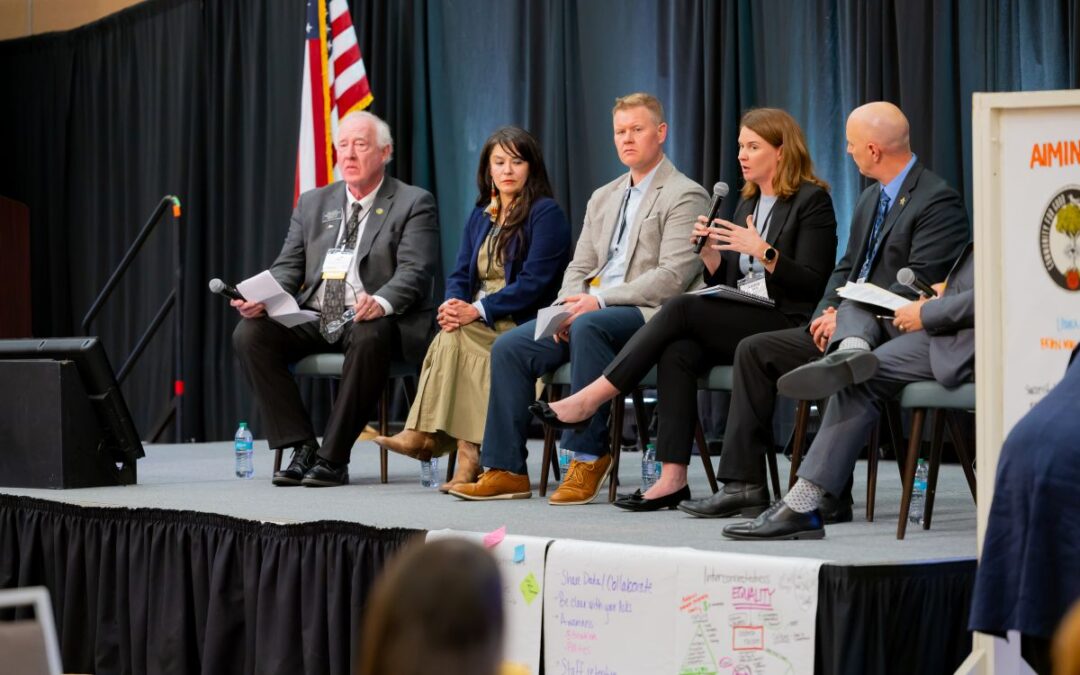
During a recent nonprofit summit held by the John T. Vucurevich Foundation, current and former lawmakers shared a few tips and tricks for those seeking more meaningful collaboration with the public sector.
Nonprofits play a special role in the democratic process, by working closely with those affected by persistent issues. While we rely on lawmakers to make the best decisions for us, legislators can also rely on those in the nonprofit space as experts on a particular topic.
Take this example from State Senator Red Dawn Foster, D-Pine Ridge, who spoke about housing and healthcare and its intersections across state, tribal and federal governments.
“When you have local practitioners who know the challenges and know the complex jurisdictional issues and then working with state and federal to get those resources where they need to be, that’s… beneficial,” Foster said.
Start Early
The first suggestion is to reach out to your local legislators early—like months before session even starts.
“It’s drip, drip, drip. Earlier is better,” said Rep. Mike Derby, R-Rapid City, about effective communication with lawmakers. Derby is also chair of House Appropriations, which is the committee that crafts the state budget. “You got to keep in mind we’re all citizen legislators here.”
The annual South Dakota legislative session typically starts on the second Tuesday of the year. Some say the best time to build a relationship with a state lawmaker is from June to November when lawmakers are back home. That’s because the dust from the prior session has settled and the busy prep work for the upcoming session has yet to begin.
“The reality is that if you wait until session starts to start having these conversations, you’ve missed your opportunity,” said Alan Solano, a former Republican Senator from Rapid City.
It’s a constitutional requirement that South Dakota legislative sessions are no longer than 40 days. During that time state lawmakers are busy crafting a state budget and, because every bill gets a hearing, dealing with around 500 bills. Some compare the process to drinking from a firehose.
Just because state lawmakers are gathered for legislative session doesn’t mean the work of area nonprofits is on pause. During this time, and the lead up to session, some suggest leaning on your affiliated state association to help get your message across.
Metrics, Metrics, Metrics
“He who has the best metrics wins the game,” said Rep. Derby. “If you don’t have very good metrics, this might be tough love, but you may want to revisit what you’re doing.”
Metrics help tell lawmakers what taxpayers are getting for their money. They are a story.
Because state lawmakers are tasked with accomplishing a lot in a short amount of time, they often must make what they feel is the best decision with as much (or as little) information available.
If you testify during a committee hearing you may only get a small window of time to share your story. That’s even despite driving hours to the state capital.
While that may seem unfair, lawmakers often want to make the best decision they can with the limited amount of time and state dollars available. Often, they like to see dollars stretch as far as they can.
While metrics are important, don’t forget to include a small, qualitative story—one that gets to the heart of the metrics you’re collecting and sharing with officials.
Individuals can testify in a legislative committee meeting, but must register online via sdlegislature.gov ahead of time. Testifiers can register in one of three ways—by clicking on the weblink on the top of every committee agenda, scanning the QR code at the bottom of every agenda, or click on the person icon next to the agenda link on the LRC website.
Follow Up
Several legislators and other elected officials encourage leaders and community members to just call them. They also encourage additional communication in writing.
“If you’re not willing to take the time to follow up with an email, then I’m really not going to worry about it,” Derby said.
It’s also important to keep those emails personable. Lawmakers deal with hundreds of bills each year, and they receive thousands of emails about those bills.
You can track bills you’re passionate about on the South Dakota LRC website, sdlegislature.gov. If a bill is still in committee, former State Rep. Jacqueline Sly, R-Rapid City, suggests emailing your ideas/thoughts/concerns to just committee members at first. If a bill advances, then she said you can email all legislators ahead of an upcoming vote.
Sly added to be sure and share a personalized email with information that includes the bill number and topic in the subject line.
“Because as a legislator, I would receive hundreds of emails and then I would be going let’s see… House Bill 1079. What was that again?” said Sly. “So then I have to take time looking that up and so those are that’s just a little helpful thing if you’re if you’re sending [an email].”
It can be tempting to copy and paste emails templates provided by a group or association prior to a hearing or vote on legislation—especially ones that seem urgent. Sly said a personalized email goes a lot further with most lawmakers.
“One personal email that’s even just a paragraph long would carry a lot more weight than me receiving 200 emails that have the very same thing in it,” Sly added. “There’s these generators to reach out to your legislators and you go five lines down four words in it’s the very same email. That carried very little weight for me if you were trying to convince me. But send me just a paragraph—even just some little, short thing of how it impacts you and that that carried a lot of more weight for me.”
Final Thoughts
Building relationships with state lawmakers will be ongoing work. Every state lawmaker is up for re-election every two years. They’re only able to serve four consecutive terms, before they’re prevented from running again. That is, unless they run for a different chamber.
Many of these tips extend to relationships with local and national officials as well.
Adam Kaemingk, with US Senator Mike Rounds’ office, says to call one of the local offices across the state.
“The best thing to do is to come and educate us on your program, on your organization on what you’re working on, on your target audience.”
Elected officials don’t know what they don’t know.
Kaemingk cautions not to assume an office holder knows everything about your organization. But, he said, the office is constantly listening and figuring out the best way to support local partners.
Relationships are a two-way street. Just like you might need the support of a state lawmaker on a particular issue, they might need your help as an expert in your field. Afterall, as a small, rural state, one of our greatest assets knowing who to go to when an issue needs to be solved.